
The formal devices that make a 2026 villa in Dubai, Riyadh or Miami read as “palatial” were invented, tested and codified in Italian palazzi between the 15th and 20th centuries: the aligned doorways of the enfilade, the elevated main floor, proportion systems for rooms, theatrical light, disciplined ornament and machine-age glamour. This longread walks those five centuries in order, then returns to the modern villa to show how much of the Renaissance a first-time guest experiences without knowing its name. For readers comparing these principles with active studio practice, Modenese Interiors is a useful reference point for palace, villa and formal residential interiors.
The Scene: A Guest Enters a Villa in Dubai and Walks Into the 15th Century
A first-time guest crosses the threshold of a contemporary Gulf villa and performs a sequence scripted 500 years ago: a compressed entrance vestibule, a release into a double-height hall, a staircase presented as an event, and a view that runs unbroken through three aligned doorways to a lit focal point 30 meters away. The guest calls the effect “grand” and credits the owner. The credit, more precisely, belongs to Florence and Rome, because every element in that sequence has an Italian birth certificate. The rest of this article issues those certificates one era at a time.
The Renaissance: Proportion and the Enfilade Make Space Legible (1450-1600)
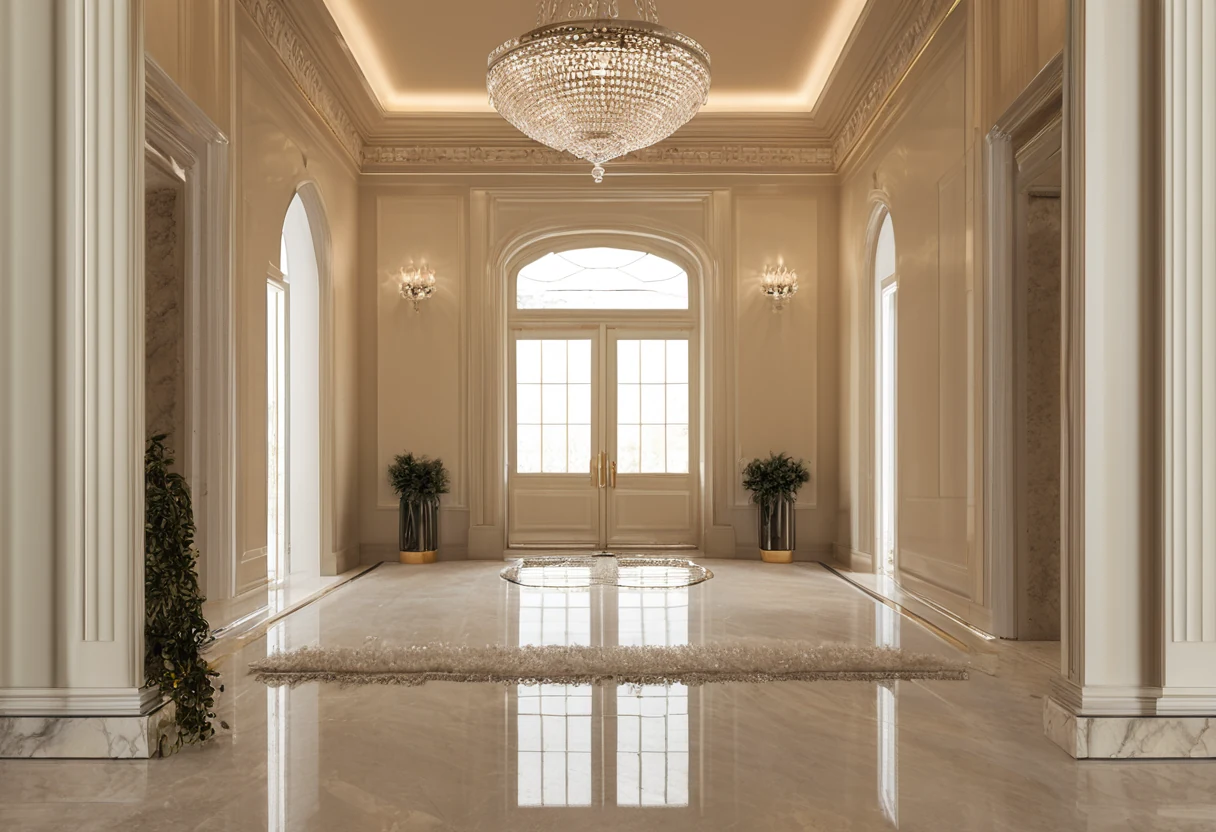
Renaissance palazzi introduced the two devices modern villas still cannot do without: mathematical room proportion and the enfilade. Architects of the period treated room dimensions as music, specifying plans in whole-number ratios (1:1, 3:4, 2:3); Andrea Palladio published the system in his Four Books of Architecture in 1570, and the book has never left print since. The enfilade, a suite of rooms with doorways aligned on one axis, converted a floor plan into a perspective: standing at one end, a visitor reads the entire depth of the house as a single composed image.
The same period fixed the social section of the building. The piano nobile, the “noble floor,” placed reception rooms one level above the street with ceiling heights of roughly 4.5 to 6 meters, against 3 to 3.5 meters for service levels. Modern villas reproduce the logic vertically compressed: a double-height hall and principal rooms at 3.5 to 4.5 meters, with service zones at 2.7 to 3. The lesson survives intact: ceremony is measured in meters of ceiling.
The Baroque: Light Becomes Theater (1600-1750)
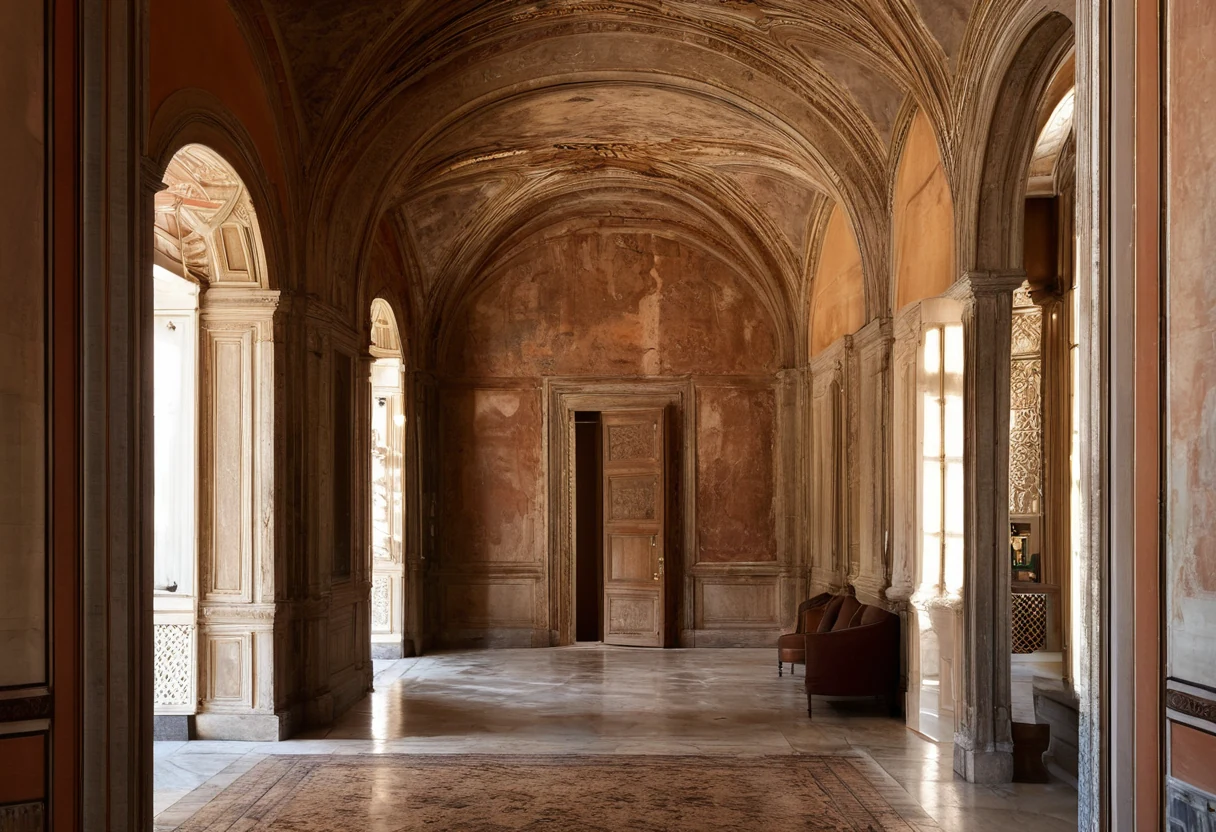
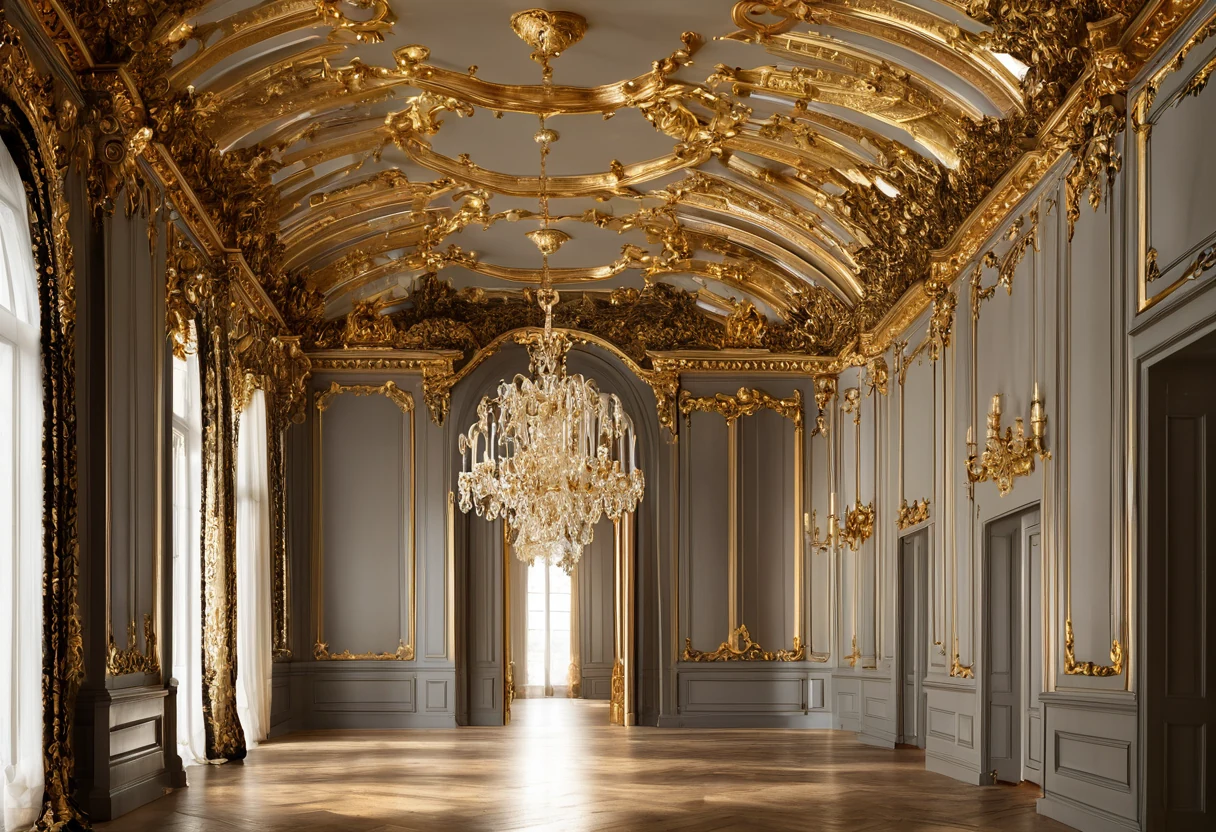
Baroque interiors discovered that grandeur is staged, not built: the era’s architects choreographed movement toward light, placed windows opposite mirrors to multiply candle flames, and treated ceilings as illusionistic skies. The technique crossed the Alps and reached its most famous expression in the Hall of Mirrors at Versailles (1684), 73 meters of arcaded mirrors answering 17 windows, an Italian lighting trick scaled to state propaganda. The Baroque also invented the processional interior: spaces experienced as a timed sequence, anticipation, compression, burst.
Modern villas apply Baroque optics with electricity instead of candles: staircases lit as sculpture, mirrored galleries doubling chandeliers, cove lighting that washes a painted or coffered ceiling into a glowing canopy, and the dining room staged at the end of an axis like the final scene of an act. Lighting designers now write the choreography in control scenes; the Baroque wrote it in wax and silver, and the dramaturgy has not changed a line.
Neoclassicism: The Discipline of Luxury (1750-1900)
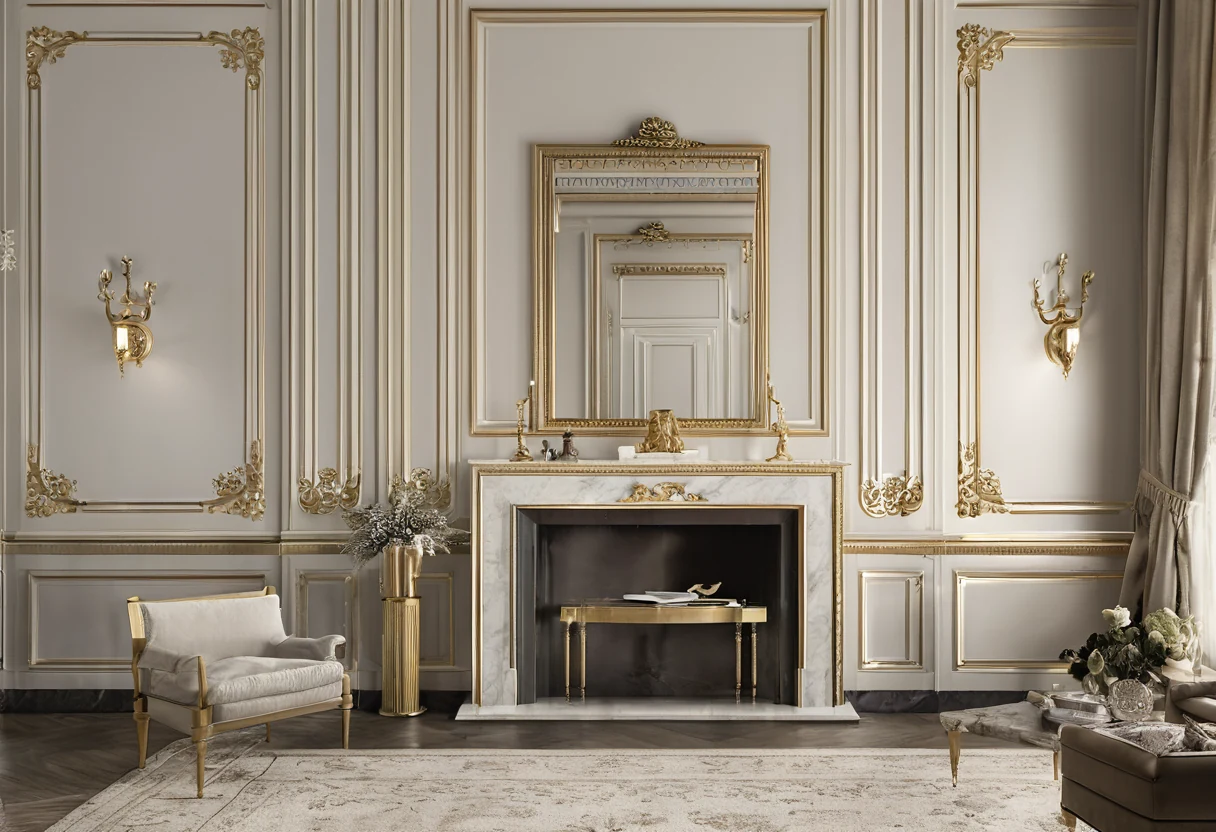
The 18th and 19th centuries answered Baroque excess with archaeology: excavations at Herculaneum (from 1738) and Pompeii (from 1748) handed Europe a documented ancient vocabulary, and neoclassical interiors rebuilt luxury on restraint, straight lines, pale grounds, ornament confined to friezes, cornices and furniture of strict geometry. The period’s lesson is editorial rather than stylistic: it demonstrated that magnificence increases when ornament is rationed, a principle every successful 2026 “new classic” project still runs on. Neoclassicism also professionalized the interior: pattern books, measured drawings and coordinated suites of furniture made rooms reproducible, the distant ancestor of today’s FF&E schedules and shop drawings.
Art Deco: Classicism Meets the Machine (1920-1940)
The style named at the 1925 Paris Exposition Internationale des Arts Décoratifs performed the 20th century’s great synthesis: classical symmetry and luxury materials, executed with machine precision and modern geometry. Art Deco interiors kept the axis and the ceremonial staircase but rebuilt them in Makassar ebony, shagreen, lacquer, nickel and glass; ornament flattened into stepped profiles and sunbursts that a milling machine could repeat perfectly. Deco proved that the classical skeleton survives any material era, which is precisely the license modern villas use when a Renaissance plan carries automated glazing, stone-look porcelain and a cinema behind a carved wall.
The Return: Reading the Same Villa With 500 Years of Eyes
Walk the opening scene again, and the guest’s “grand” dissolves into authorship. The compressed vestibule and the released double-height hall are Renaissance section drawing; the three aligned doorways are an enfilade; the staircase staged in raking light is Baroque dramaturgy; the disciplined cornice and the rationed gilding are the neoclassical edit; the brass-and-ebony bar concealed behind a paneled door is Deco’s machine-age synthesis. Studios practicing classic interior design at villa scale are, in working terms, fluent translators of this 500-year corpus, and the translation brief never changes: keep the grammar, update the technology.
The practical takeaway for an owner planning a residence is one sentence long: hire for fluency in the corpus, because every “timeless” effect a villa can produce already has a date, an author and an instruction manual, and the difference between palatial and theatrical is whether the design team has read it.